
The Republic Seychelles and Revolutionary Government of Zanzibar explored opportunities to strengthen cooperation on the sustainable development of ocean resources during a five-day South-South Cooperation.
Learning Exchange held in Seychelles from 31st August to 4th September 2026.
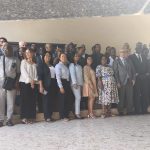
The Republic of Seychelles hosted an official delegation from the Revolutionary Government of Zanzibar from 31st August to 04th September 2026, as part of the South-South Cooperation Learning Exchange between the Revolutionary Government of Zanzibar and the Government of Seychelles.
The 13-member delegation comprised eight officials from the Government of Zanzibar and five representatives from the International Union for Conservation of Nature (IUCN). The delegation was led by Hon. Makame Sufiani, with IUCN Regional Director, Mr. Luther Anukur also participating in the programme.
The programme brought together government institutions, conservation organisations, development partners and private-sector stakeholders, with discussions covering Blue Economy governance, sustainable fisheries, aquaculture, marine spatial planning, conservation, climate resilience, innovative financing, sustainable tourism, green ports, circular economy and entrepreneurship.
Despite intermittent rainy weather during the week, the programme proceeded successfully, with the delegation undertaking a full schedule of institutional meetings, technical exchanges and field visits across Mahé, Praslin and neighbouring islands.
Shared priorities as Indian Ocean island states.
As African archipelagic island jurisdictions and Indian Ocean neighbours, Seychelles and Zanzibar share many of the same opportunities and challenges associated with managing ocean and coastal resources.
The learning exchange was grounded in the recognition that the ocean is central to the economies, livelihoods, food security and environmental resilience of both jurisdictions.
For Seychelles, the exchange provided an opportunity to share more than a decade of experience in developing its Blue Economy framework, while also learning from Zanzibar’s priorities and approaches to fisheries, tourism, conservation and sustainable development.
The discussions reinforced the concept of a Regenerative Blue Economy; one that seeks not only to generate economic value from marine resources, but also to protect, restore and invest in the natural systems that sustain island economies and communities.
Sharing Seychelles’ Blue Economy experience.
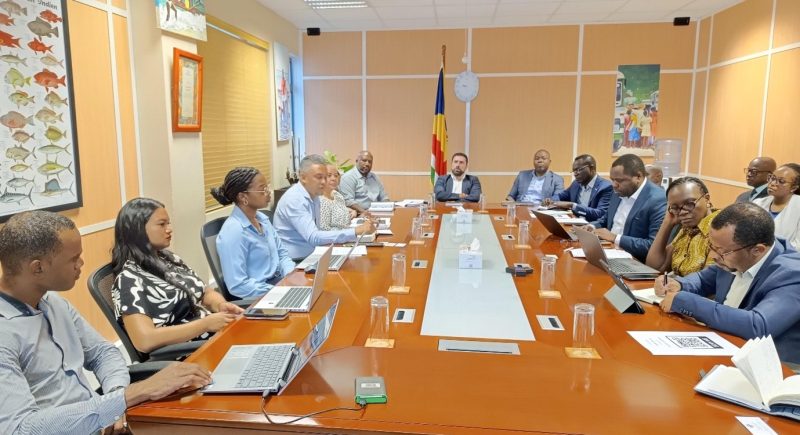
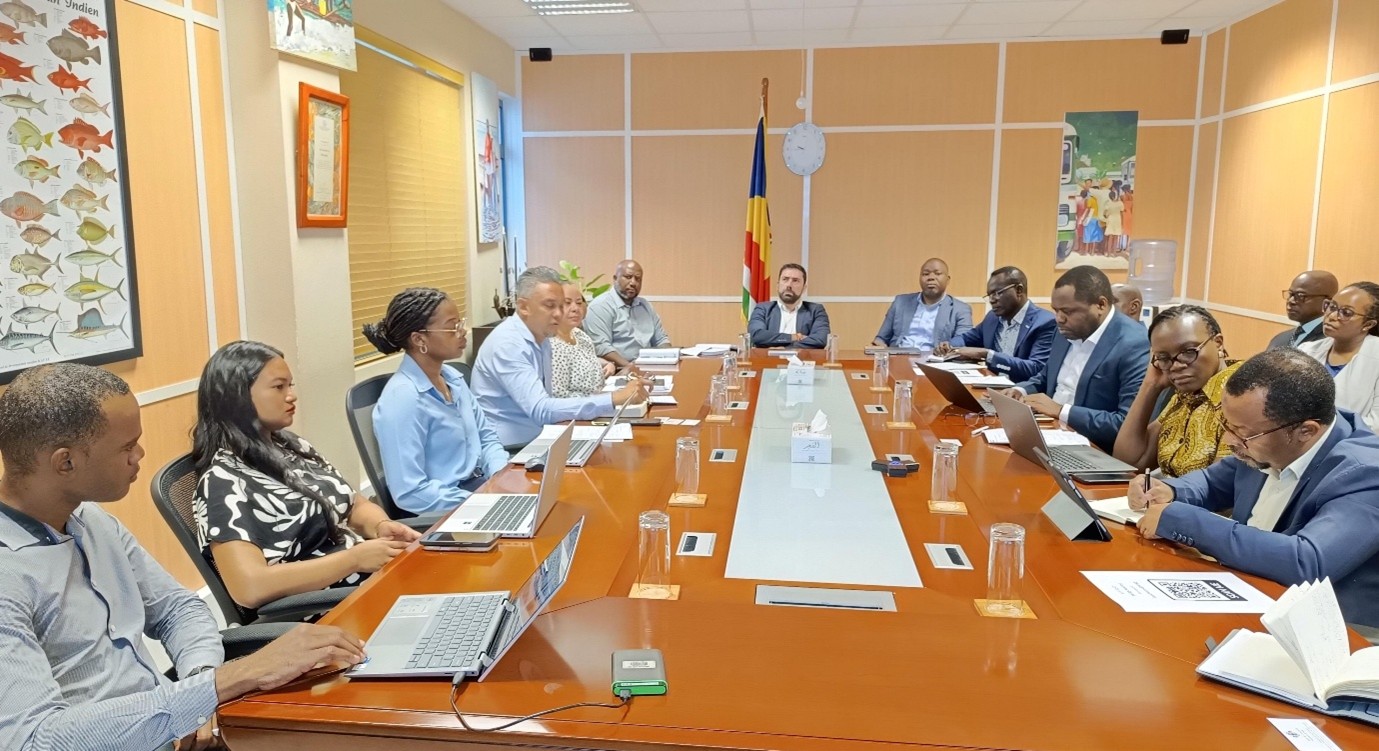 Seychelles Department of Blue Economy, IUCN representatives and Zanzibar Delegation Strengthen Dialogue on Blue Economy Development.
The programme began with technical engagements with the Department of Blue Economy, where the Zanzibar delegation received an overview of Seychelles’ Blue Economy governance framework, institutional development, investment priorities and emerging areas of work.
The Seychelles delegation highlighted the country’s evolution of the Blue Economy concept since 2014 and the development of the Blue Economy Strategic Policy Framework and Roadmap 2018-2030.
Discussions also covered the ongoing review of the framework and the development of a second-generation policy and strategic framework, as Seychelles continues to refine its approach based on experience gained over the past decade.
The cross-cutting nature of the Blue Economy was emphasised, together with the importance of coordination across fisheries, tourism, maritime transport, conservation, ports, finance, education and other sectors.
The planned establishment of a Blue Economy Council was also highlighted as an important step towards strengthening coordination and providing strategic advice on Blue Economy matters.
Department of Fisheries Engages with Zanzibar Delegation.
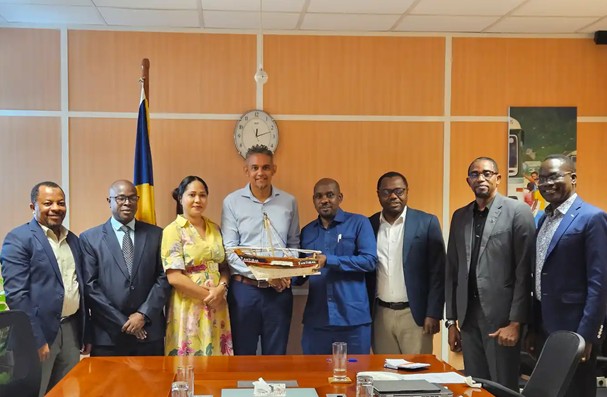
Department of Fisheries receives an Official Gift from the Zanzibar Delegation.
The programme also included technical engagements with the Department of Fisheries, which provided an overview of Seychelles’ fisheries sector, including fisheries exports, licensing, employment and other areas of economic importance.
The delegation was particularly interested in learning how Seychelles has organised the fishing sector into three distinct sub-sectors: artisanal, semi-industrial and industrial fisheries, each playing an important role in the economy. Discussions also covered Seychelles’ efforts to increase the economic value derived from its fisheries resources through value addition, including tuna processing and the production and export of canned tuna.
The exchange further covered shared challenges, including Illegal, Unreported and Unregulated (IUU) fishing, with Seychelles sharing its experience in monitoring and managing fishing activities through the Seychelles Fisheries Authority’s Monitoring, Control and Surveillance (MCS) Section and its role in supporting the monitoring and management of fishing activities.
From fisheries to the wider maritime economy.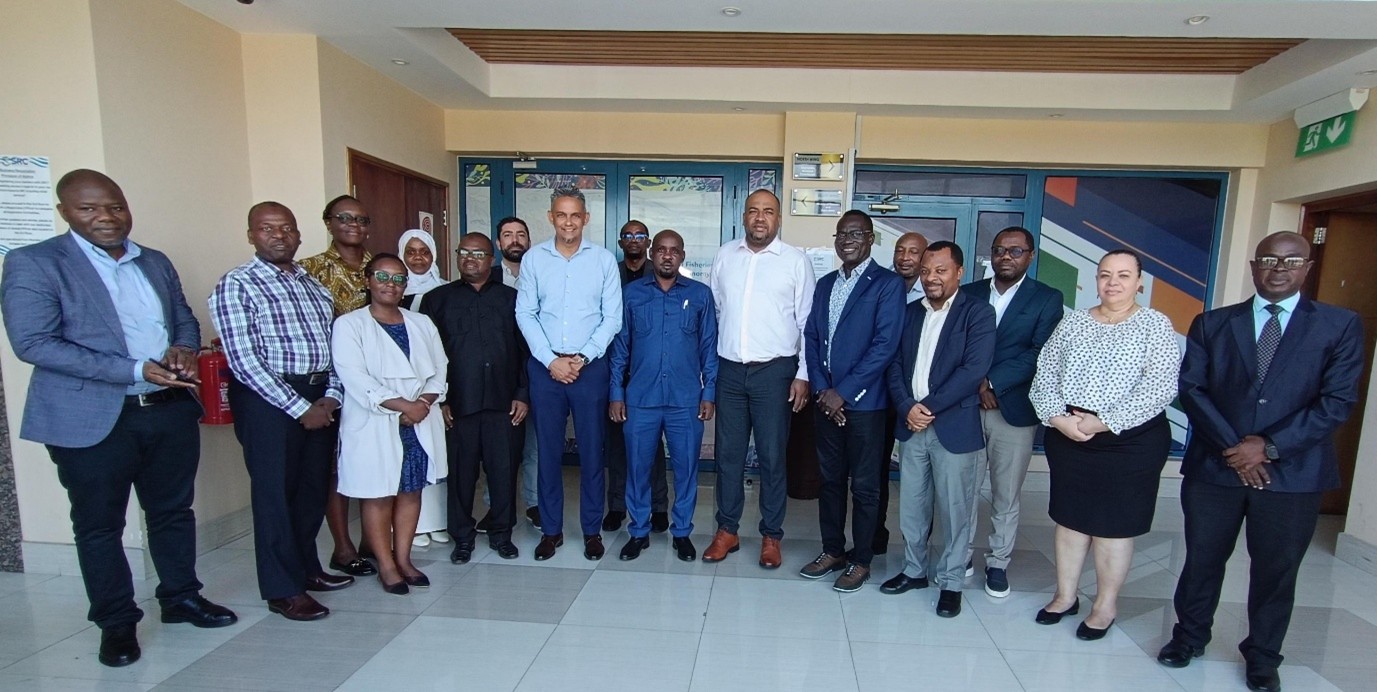
Zanzibar Delegation meets with the Minister for Agriculture, Fisheries and Blue Economy, Mr. Wallace Cosgrow.
During a separate meeting with the Minister for Agriculture, Fisheries and Blue Economy, Mr. Wallace Cosgrow, discussions focused on Seychelles’ experience in developing fisheries as part of a broader maritime economy.
The Minister shared Seychelles’ experience in the gradual development of Port Victoria and its relationship with the fisheries sector, including the contribution of industrial tuna fisheries to port infrastructure, commercial activity and the wider fisheries value chain.
The discussion also examined fisheries infrastructure, artisanal and industrial fisheries, processing and value addition, aquaculture, sustainable resource management and the importance of balancing fisheries development with marine conservation.
The Minister emphasised that fisheries development is a gradual process requiring investment in infrastructure, skills, institutions, markets and supporting services.
Both sides recognised the value of continued knowledge exchange, including learning from different international approaches and adapting lessons to national circumstances.
Learning from Seychelles’ innovative approach to Ocean Finance.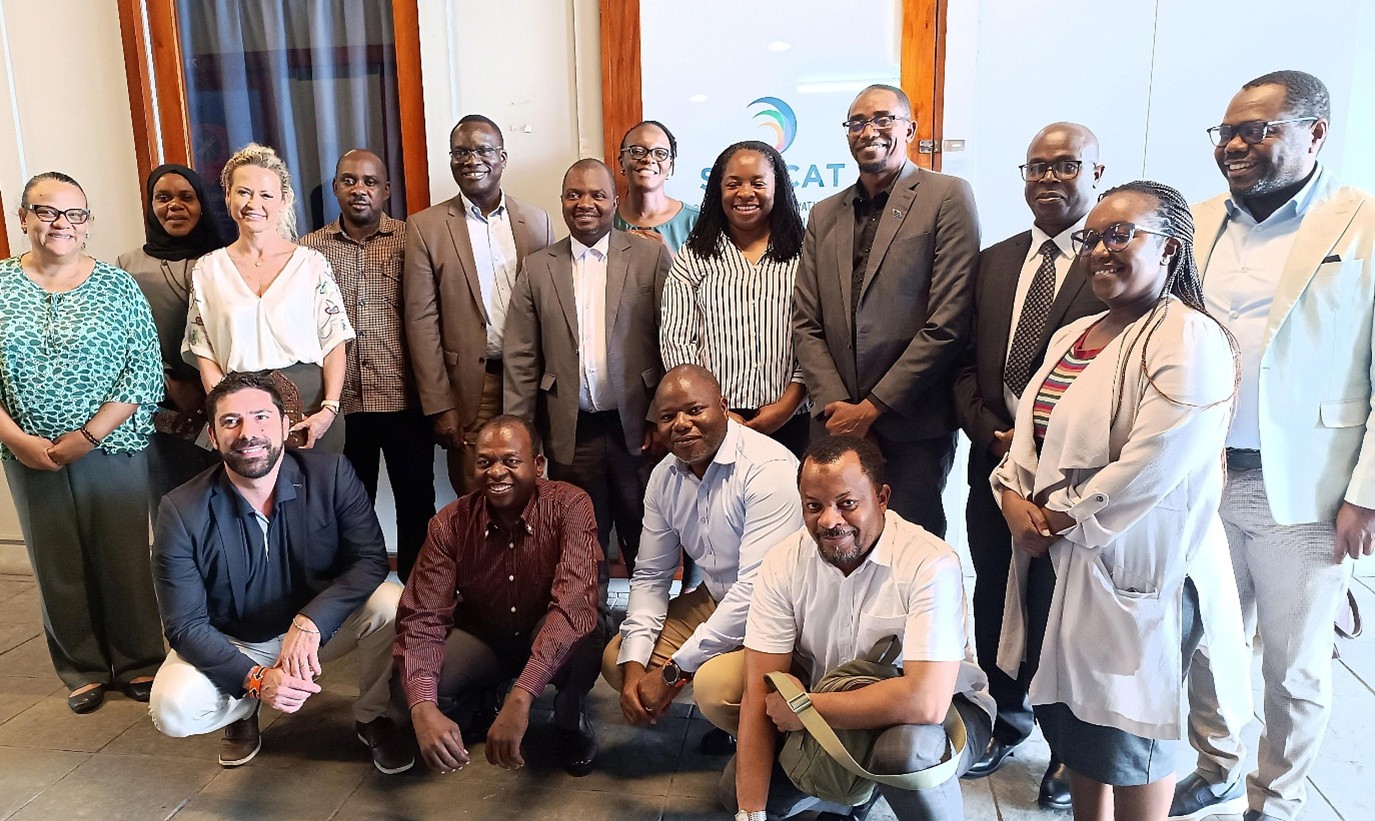
Zanzibar Delegation and SeyCCAT at a meeting to strengthen Cooperation on the Blue Economy.
The delegation was introduced to Seychelles’ experience with debt-for-nature financing, the Sovereign Blue Bond and the Blue Grants Fund, including the role of the Seychelles Conservation and Climate Adaptation Trust (SeyCCAT) in supporting marine conservation, climate adaptation and sustainable Blue Economy initiatives.
The discussions demonstrated how innovative financial mechanisms can help island states mobilise resources for conservation and climate resilience while supporting sustainable economic development.
The exchange with SeyCCAT also provided an opportunity to discuss the evolution of Seychelles’ conservation-finance model, its links with marine spatial planning and Blue Economy innovation and potential opportunities for knowledge sharing with Zanzibar.
For both Seychelles and Zanzibar, these matters are particularly relevant as growing economic activity increases the need to manage interactions between fisheries, tourism, conservation, maritime transport and other users of ocean space.
Exploring Seychelles’ Experience in Marine Conservation and Coral Restoration.
At Cousin Island, discussions with Nature Seychelles focused on wetland and coastal ecosystem management, marine protected areas, coral restoration and climate resilience.
The delegation was introduced to the experience of the Reef Rescuers coral restoration programme and to the Assisted Recovery of Corals (ARC) Facility on Praslin, which uses land-based coral aquaculture techniques to support coral restoration.
These exchanges demonstrated how scientific research, ecosystem restoration, protected-area management and partnerships can contribute to building resilience in marine ecosystems.
Visit to Moyenne Island.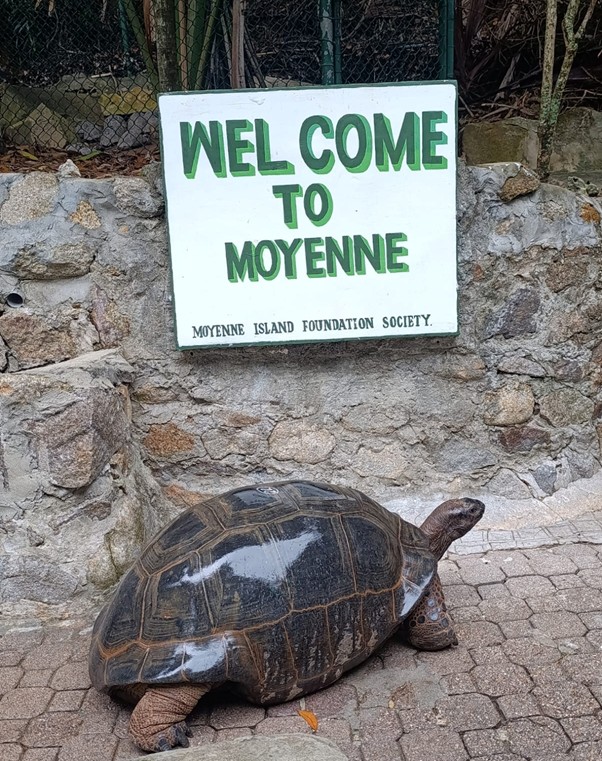
A significant component of the programme involved field visits that allowed the Zanzibar delegation to observe Seychelles’ conservation approaches in practice.
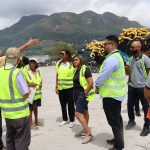
The visit to Moyenne Island provided another perspective on long-term conservation. Despite the rainy weather, the delegation explored the island’s history and conservation work, including giant tortoise management, invasive species eradication, native and endemic tree planting and coral restoration.
The visit also demonstrated the importance of partnerships among government agencies, conservation organisations, foundations and other stakeholders in protecting island ecosystems.
Partnerships for sustainable island development.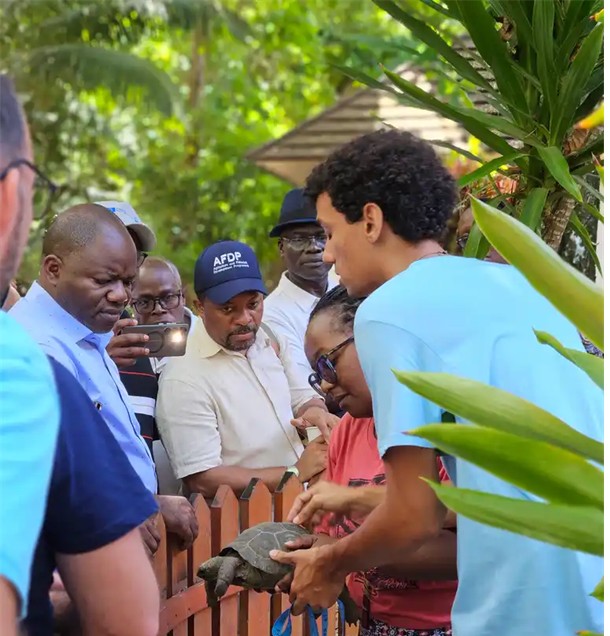
On Silhouette Island, the delegation visited the Island Conservation Society’s Conservation Centre and engaged with stakeholders involved in conservation and sustainable island development.
The discussions examined the role of government, civil society and the private sector in managing conservation on government-owned islands.
The delegation also visited the Giant Tortoise Sanctuary and received an overview of the resources, long-term commitment and partnerships required to maintain effective conservation programmes.
The visit highlighted the importance of collaborative approaches in which conservation objectives are integrated with the sustainable development and management of island communities and destinations.
Linking conservation with sustainable tourism.
The exchange also included engagements with Seychelles’ tourism and cultural authorities, providing an opportunity to discuss sustainable tourism, cultural heritage and coastal destination management.
The discussions reflected the close relationship between tourism, healthy ecosystems and the Blue Economy, particularly for island destinations where natural and cultural heritage are among the foundations of the tourism economy.
Learning from Seychelles’ Circular Economy Entrepreneurs.
The delegation also engaged directly with Seychelles-based entrepreneurs working at the intersection of the Blue Economy and circular economy.
Presentations showcased practical examples of transforming marine resources and fisheries by-products into higher-value products.
Ms. Ingrid Saurer of BELICHE shared experience in developing sustainable marine-based products, including seaweed-based applications, with discussions covering product development, quality, research, testing, certification and market access.
Ms. Claudette Albert, Chairperson of the Confederation of Women in Business (COMFWB), presented the organisation’s work supporting women, youth and start-ups through incubation, product development, value addition and entrepreneurship support. Her presentation also highlighted the development of fish leather from fisheries by-products as an example of circular economy innovation.
Mr. Shahid Melanie of Ocean Good Fertilizers presented specifically on Biofertilisers, highlighting another potential avenue for transforming organic waste streams into value-added products and supporting circular economy approaches.
The exchange identified potential opportunities for Seychelles and Zanzibar entrepreneurs to develop peer-to-peer relationships and explore cooperation in areas such as seaweed products, fisheries waste valorisation, marine-based products, biofertilisers, product development and market access.
From fishing waste to Circular Economy.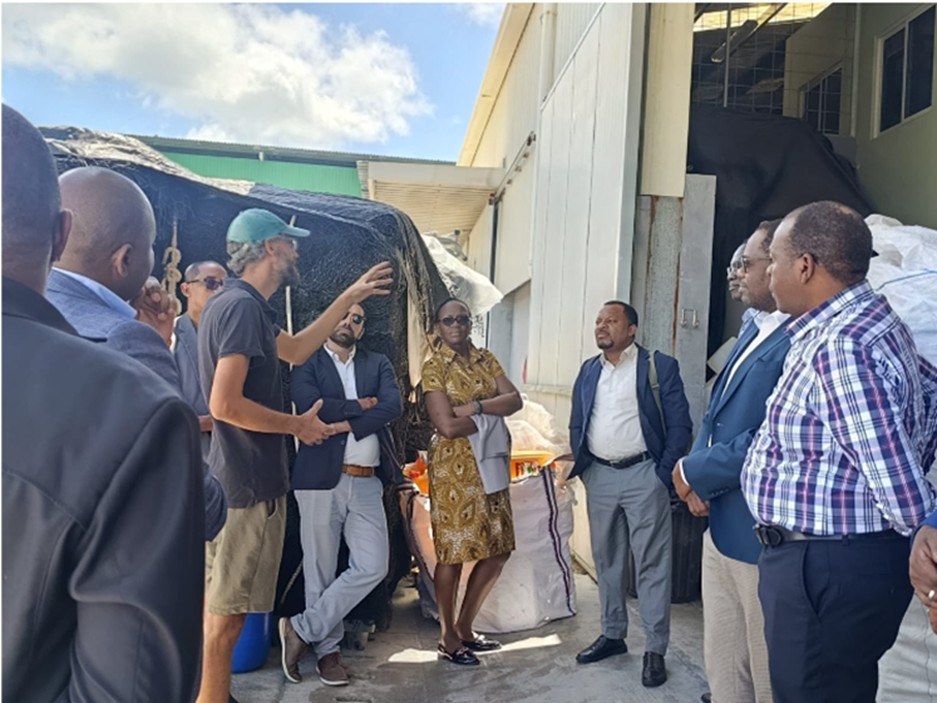
The delegation also visited Brikole, a circular economy initiative at Île du Port, where founder Mr. Kyle De Bouter introduced participants to the organisation’s approach to recovering and repurposing waste generated by the fishing industry.
The delegation was introduced to Brikole’s vision, mission and operational processes, including the recovery and pre-treatment of discarded fishing nets and other fishing-related equipment.
The visit demonstrated how waste that would otherwise enter the marine environment can be recovered and redirected into productive uses, while creating opportunities for local enterprise and circular economic activity.
The experience provided a practical example of how environmental challenges can be approached through innovation, entrepreneurship and resource recovery.
Strengthening sustainable fisheries and maritime infrastructure.
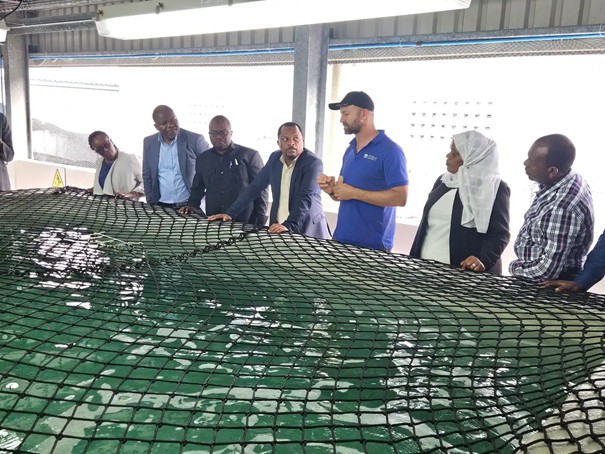
The Zanzibar Delegation visits the Aquaculture Facility at the Seychelles Fisheries Authority.
At the Seychelles Fisheries Authority, the delegation received further insight into Seychelles’ tuna fisheries management framework, monitoring and compliance systems, aquaculture development and opportunities for value addition.
The visit provided a practical platform for sharing experiences on sustainable fisheries management and identifying lessons that could be relevant to the continued development of Zanzibar’s fisheries sector.
The delegation also visited Port Victoria. At the Seychelles Ports Authority, the delegation gained insight into port management and operations, the Port Green Plan, planned port expansion and infrastructure development, as well as, the important role of Port Victoria in supporting the fisheries and maritime sectors.
Site visits to the Commercial Port and Fishing Port provided first-hand exposure to the infrastructure supporting Seychelles’ fisheries and maritime economy, including the relationship between port operations, industrial tuna fisheries and marine tourism.
A platform for future cooperation.
Across the programme, the discussions identified a broad range of potential areas for continued Seychelles-Zanzibar cooperation.
These include:
The discussions also highlighted opportunities for government-to-government cooperation, institutional partnerships, technical exchanges, entrepreneur-to-entrepreneur engagement and collaboration among conservation organisations and other stakeholders.
Building on shared experience.
The five-day exchange demonstrated the value of South-South cooperation among island states facing similar development and environmental challenges.
For Zanzibar, the programme provided an opportunity to observe Seychelles’ experience through both institutional discussions and practical field visits. For Seychelles, the exchange offered an opportunity to learn from Zanzibar’s priorities, experiences and aspirations for its own Regenerative Blue Economy.
The programme reinforced a central message: sustainable Blue Economy development cannot be separated from healthy marine and coastal ecosystems, effective governance, investment, innovation and the people whose livelihoods depend on the ocean.
As two Indian Ocean island jurisdictions, Seychelles and Zanzibar have a strong foundation on which to build continued dialogue and cooperation.
The successful and fruitful learning exchange concluded on the 04th September 2026, having created new opportunities for knowledge sharing, institutional linkages and practical cooperation towards a more sustainable, resilient and regenerative Blue Economy for island communities.
The Government of Seychelles, through the Department of Blue Economy, looks forward to building on the relationships established during the visit and continuing the dialogue with Zanzibar and its partners.
Seychelles extends its best wishes to the Revolutionary Government of Zanzibar as it advances its Regenerative Blue Economy agenda and looks forward to continued cooperation and knowledge exchange in support of shared sustainable development goals.
– END –