
 A three-day digital content creation workshop has equipped young participants with practical storytelling skills to communicate Fisheries and Blue Economy matters, promote transparency and encourage greater public understanding of Seychelles’ marine resources.
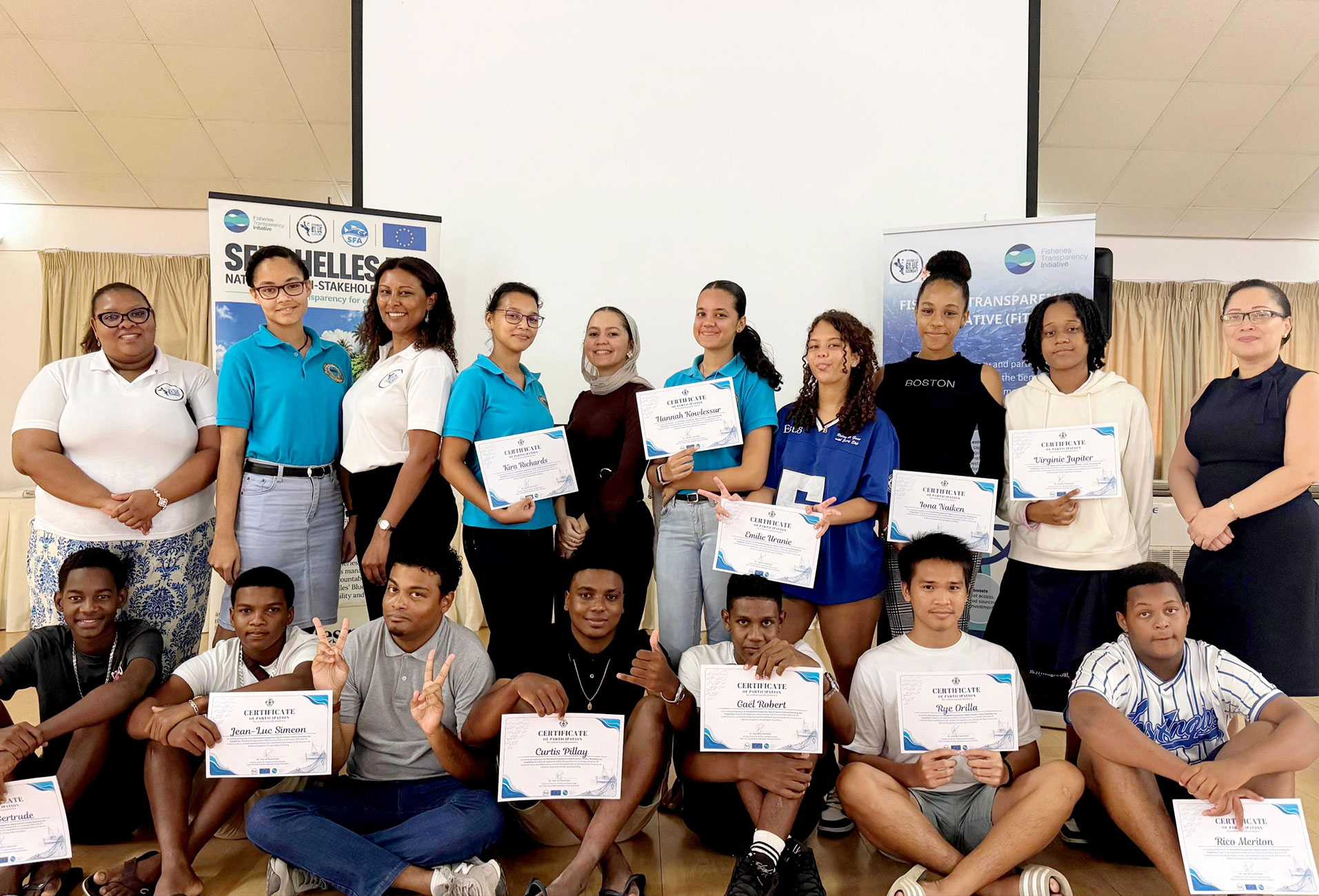
Young participants took part in the #HookedOnTransparency Digital Content Creating Challenge, held from 21st to 23rd October 2026 at the STC Conference Room, where they explored how digital media can make information about Seychelles’ fisheries and Blue Economy more accessible, engaging and relevant to younger audiences.
Co-hosted by the Fisheries Transparency Initiative (FiTI) International Secretariat and the Seychelles Department of Blue Economy, the workshop combined learning about fisheries governance and transparency with practical training in digital communication, storytelling and video production.
The Fisheries Transparency Initiative (FiTI) is a global, multi-stakeholder initiative that seeks to improve transparency and collaboration in the management of marine fisheries. It supports countries in making fisheries management information more accessible, credible and useful to the public, helping to promote informed public debate, accountability and more sustainable fisheries management. Seychelles hosts the FiTI International Secretariat and collaborates with the initiative to strengthen transparency and stakeholder participation in fisheries governance.
The initiative sought to encourage young people not only to understand the importance of fisheries transparency, but also to play an active role in sharing knowledge, raising public awareness and promoting informed engagement in the sustainable management of marine resources.
 Understanding Fisheries, Transparency and the Blue Economy
The opening day focused on Seychelles’ Blue Economy and Fisheries Sector, highlighting the importance of accessible and reliable information in strengthening governance, accountability and public trust.
Participants explored the contribution of fisheries and other ocean-based activities to national development, food security, employment and livelihoods. Discussions also encouraged them to look beyond fishing itself and consider the wider range of opportunities within the sector, including marine science, research, engineering, entrepreneurship, data management and communications.
These discussions provided the foundation for the subsequent training, linking the importance of transparent and reliable fisheries information with the need to communicate it effectively to the wider public.
From information to engaging digital stories.
The second day focused on the principles of effective digital communication and how to translate information into content that captures attention while conveying meaningful messages.
Participants explored how to identify target audiences, establish clear communication objectives, select appropriate social media platforms and develop stories that resonate with their intended audiences. Practical considerations for smartphone video production were also addressed, including lighting, sound quality, camera angles and filming techniques.
Participants began developing scripts for their competition videos, applying the principles discussed during the sessions to shape their own stories about fisheries and the Blue Economy.
The final day, focused on practical digital content creation, effective storytelling and the responsible use of artificial intelligence (AI). Participants were introduced to tools such as Canva, CapCut and Meta Business Suite for designing graphics, editing videos, scheduling content and monitoring social media performance.
The sessions also examined how AI can support content creation while underscoring the importance of fact-checking, protecting personal information and maintaining originality. Participants explored the use of strong opening hooks, accessible language, credible information and clear messaging to communicate complex topics in ways that engage younger audiences.
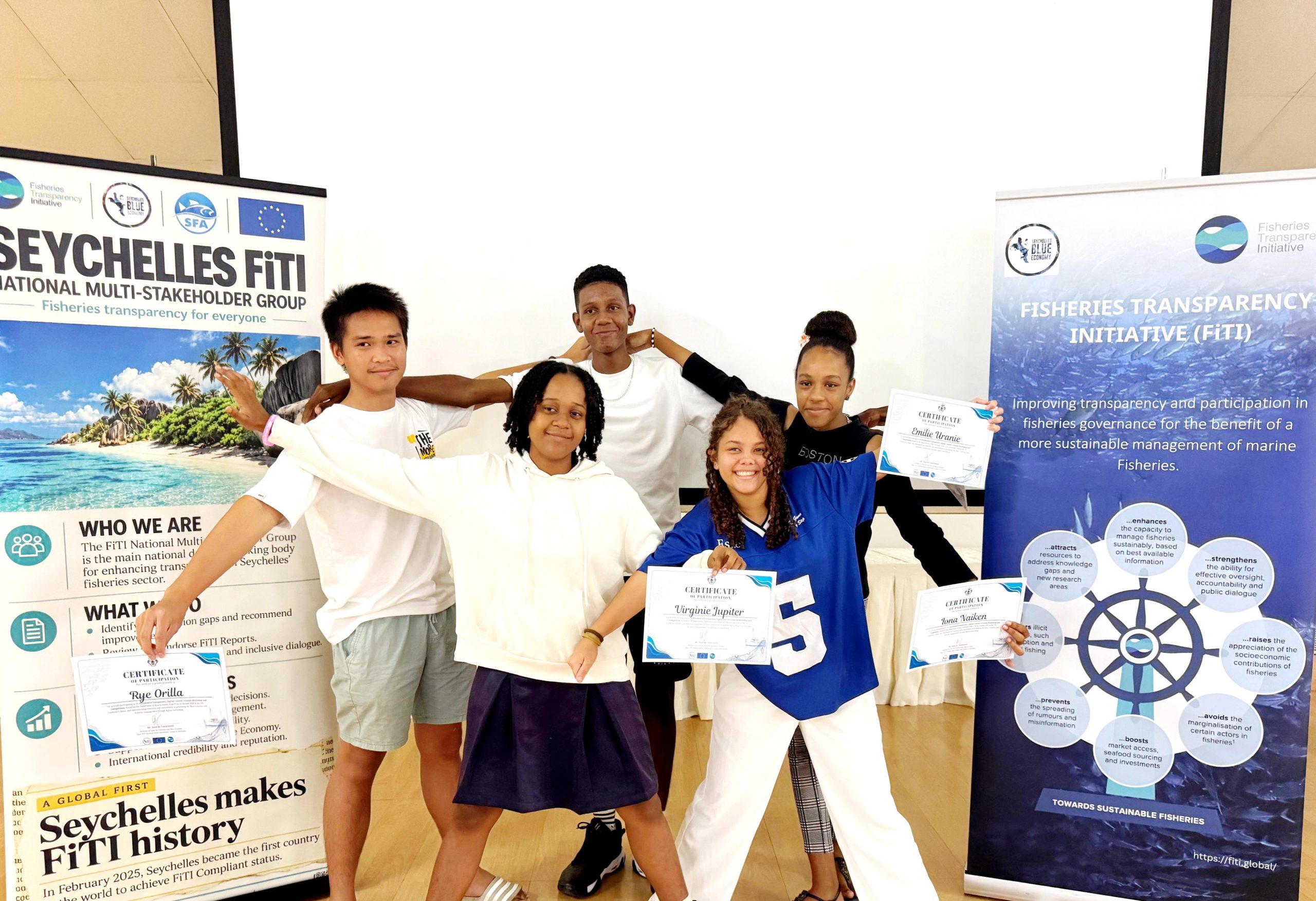
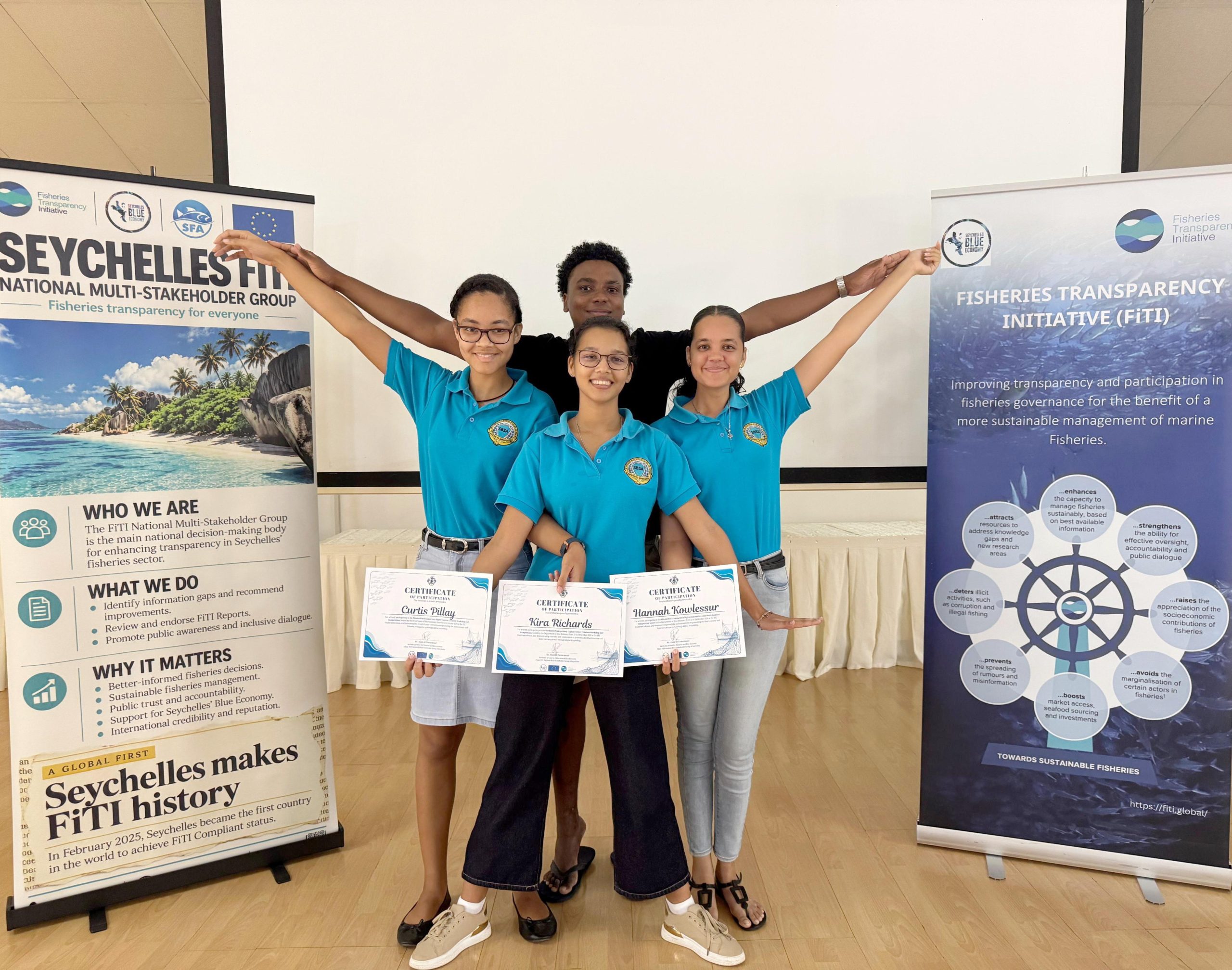
Upon completing the training, participants received certificates of participation recognising them “for demonstrating creativity and commitment to Promoting the Blue Economy and fisheries transparency through digital storytelling”.
Promoting transparency beyond the workshop.
 Participants’ competition entries are currently being reviewed by the National Multi-Stakeholder Group (NMSG). The winner will be announced once the NMSG has reached agreement on the winning entry.
Beyond developing practical digital skills, the initiative seeks to encourage younger generations to take an informed interest in Seychelles’ Fisheries and Blue Economy. By combining creativity with accurate information, it provides an opportunity for young people to explore issues affecting the sector and communicate them in accessible ways to their peers and the wider public.
Fisheries Transparency is essential to informed public understanding and accountable governance. Making relevant information accessible and understandable can help people engage more meaningfully with the decisions, policies and activities that affect fisheries and marine resources.
Through the #HookedOnTransparency initiative, the FiTI International Secretariat and the Seychelles Department of Blue Economy aim to help bridge the gap between fisheries information and public understanding, while encouraging young people to become active contributors to knowledge-sharing and advocacy for transparency.
Ultimately, the initiative seeks to ensure that fisheries transparency is not confined to institutional discussions, but becomes a subject that younger generations understand, communicate and champion; contributing to a better-informed society and greater public engagement in the sustainable management of Seychelles’ marine resources.