
 Exchange visit provides an opportunity to explore innovative approaches, strengthen institutional partnerships and identify opportunities for collaboration in sustainable ocean development.
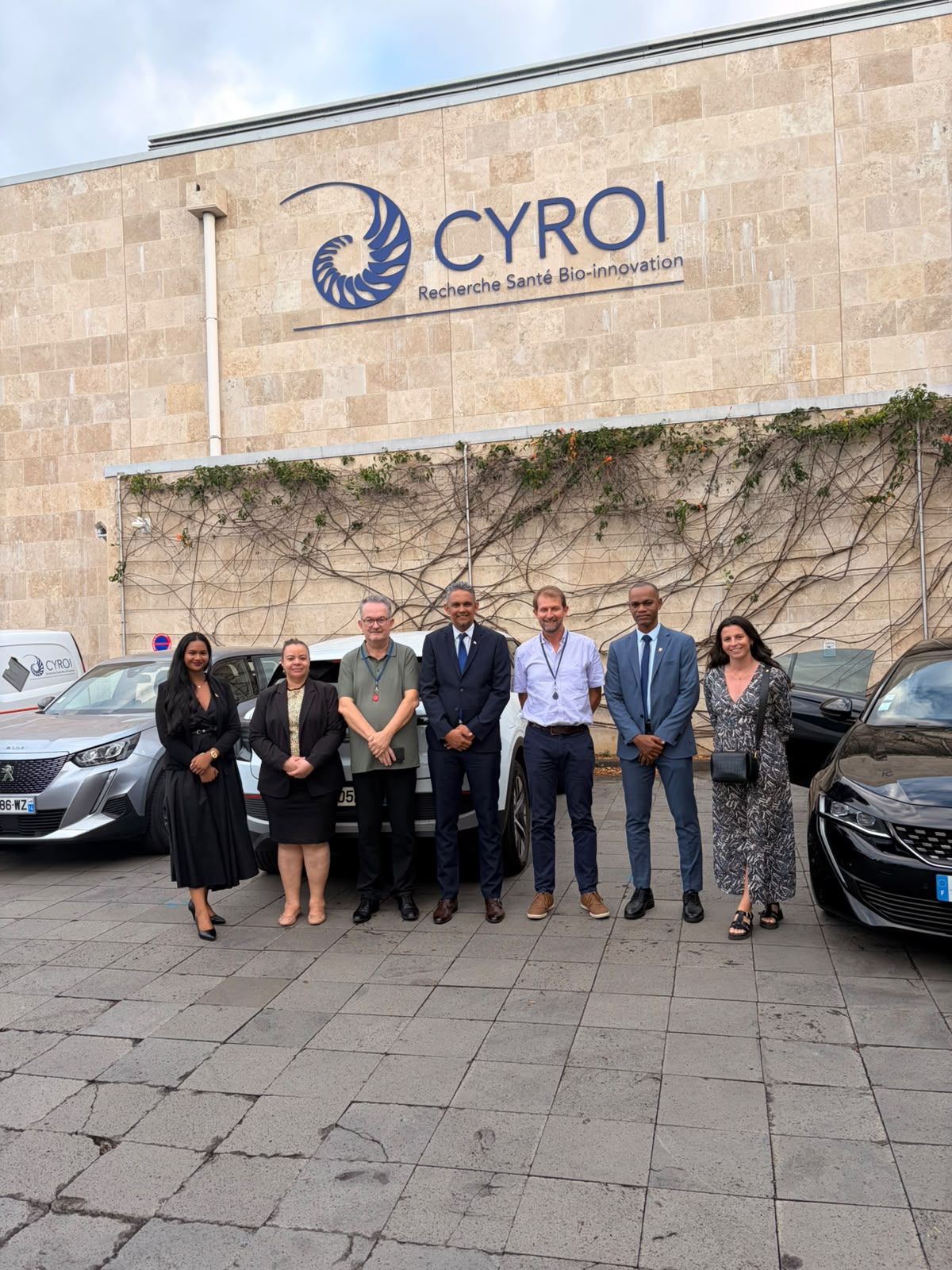
The Department of the Blue Economy of Seychelles undertook an exchange visit to Réunion Island fron (24-29th October 2026) aimed at strengthening regional cooperation, promoting knowledge-sharing and exploring opportunities for collaboration in the development of sustainable ocean-based industries.
The delegation was headed by the Secretary of sStae for Fisheries and Blue Economy, Mr. Alain de Comarmond, the Principal Secretary for Blue Economy, Ms.. Veronique Nibourette, Director for Blue Economy, Mr Terrence Crea and Ms Kim Samy, Programme Development Officer from the Blue Economy Department.
The visit provided an important platform for Seychelles to engage with Réunion’s blue economy institutions, research organisations, private-sector operators, entrepreneurs and business networks. It also offered an opportunity to learn from Réunion’s experiences in marine resource management, marine biotechnology, innovation, entrepreneurship and the development of sustainable ocean industries.
Throughout the programme, the delegation engaged with several organisations working across different areas of the blue economy, gaining valuable insights into their institutional arrangements, ongoing initiatives, business models and approaches to fostering innovation and investment in the ocean economy.
One of the key highlights of the exchange was the visit to CITEB (Centre d’Innovation et de Transfert de Technologies), where the delegation learned about its work in supporting innovation, research and the development of marine-based products and technologies.
The engagement provided useful perspectives on how research institutions and innovation centres can support entrepreneurs, facilitate technology transfer and promote the commercialisation of marine resources. These experiences are particularly relevant to Seychelles as we continue to advance opportunities in marine biotechnology, including the development of products for the pharmaceutical, cosmetics, nutraceutical and other emerging industries.
The delegation also exchanged with the CRPMEM (Comité Régional des Pêches Maritimes et des Élevages Marins), gaining insights into the institutional and operational approaches supporting fisheries management and marine aquaculture in Réunion.
Discussions further included engagement with Valobio, providing an opportunity to explore approaches to sustainable use of marine resources, innovation and the development of value-added products.
Connecting research, innovation and entrepreneurship:
The programme also provided exposure to the wider blue economy innovation ecosystem in Réunion, particularly the importance of connecting research institutions, businesses, entrepreneurs and investment-support organisations. These engagements highlighted the role of institutional collaboration, technical expertise and business support in translating scientific knowledge and marine resources into viable economic opportunities. For Seychelles, these lessons are important as we seek to strengthen our own blue economy ecosystem, support local entrepreneurs and encourage greater value addition from sustainably managed marine resources.
Strengthening maritime and business partnerships:
Another significant component of the exchange was the visit to the Grand Port Maritime de La Réunion (GPMLR), which provided insights into the role of maritime infrastructure and port operations in supporting the regional blue economy.
The programme also featured presentations and start-up pitches from ID Ocean,, Cluster Maritime, Institut Bleu and Export Club. These presentations showcased different approaches to developing ocean-related businesses, supporting innovation, strengthening maritime networks and facilitating market access.
Through the concluding exchange, the Seychelles delegation outlined the country’s blue economy context, current challenges, future outlook and expectations for regional cooperation. This provided an opportunity to share Seychelles’ experiences and priorities while identifying areas where the two island economies could benefit from closer collaboration.
Opportunities for Seychelles:
The exchange visit reinforced the importance of regional partnerships in advancing the blue economy, particularly for Small Island Developing States (SIDS) that share similar challenges relating to limited resources, climate vulnerability, marine ecosystem protection and the need to diversify their economies.
Several areas emerged as particularly relevant for continued collaboration:
– Marine biotechnology: Strengthening research, innovation, product development and commercialisation of marine biological resources.
– Sustainable fisheries and aquaculture: Sharing technical knowledge and experiences in responsible fisheries management, aquaculture development and sustainable production.
– Value addition: Exploring opportunities to transform local marine resources and fisheries by-products into higher-value products.
– Innovation and entrepreneurship: Strengthening support systems for start-ups, MSMEs, technology transfer and business incubation.
– Maritime development: Learning from Réunion’s experience in maritime infrastructure, industry development and business networking.
– Investment and market access: Identifying opportunities for joint initiatives, private-sector partnerships and access to regional and international markets.
The exchange visit represents an important step towards strengthening cooperation between Seychelles and Réunion in advancing a more diversified, innovative and sustainable blue economy.
For Seychelles, the experience provides valuable lessons that can inform ongoing policy development, institutional strengthening and the implementation of initiatives under the country’s Blue Economy Strategic Policy Framework and Roadmap (2018–2030).
Beyond the knowledge gained, the visit helped establish new connections and identify potential areas for practical collaboration between institutions, researchers, entrepreneurs and private-sector stakeholders.
As Seychelles continue to advance its blue economy ambitions, it recognise that stronger regional partnerships, knowledge exchange and joint initiatives will be essential in unlocking the full potential of our ocean resources while safeguarding the marine environment for future generations.
The exchange reaffirmed our commitment to working with regional partners towards a more resilient, inclusive and prosperous blue economy for Seychelles and the wider Indian Ocean region.